
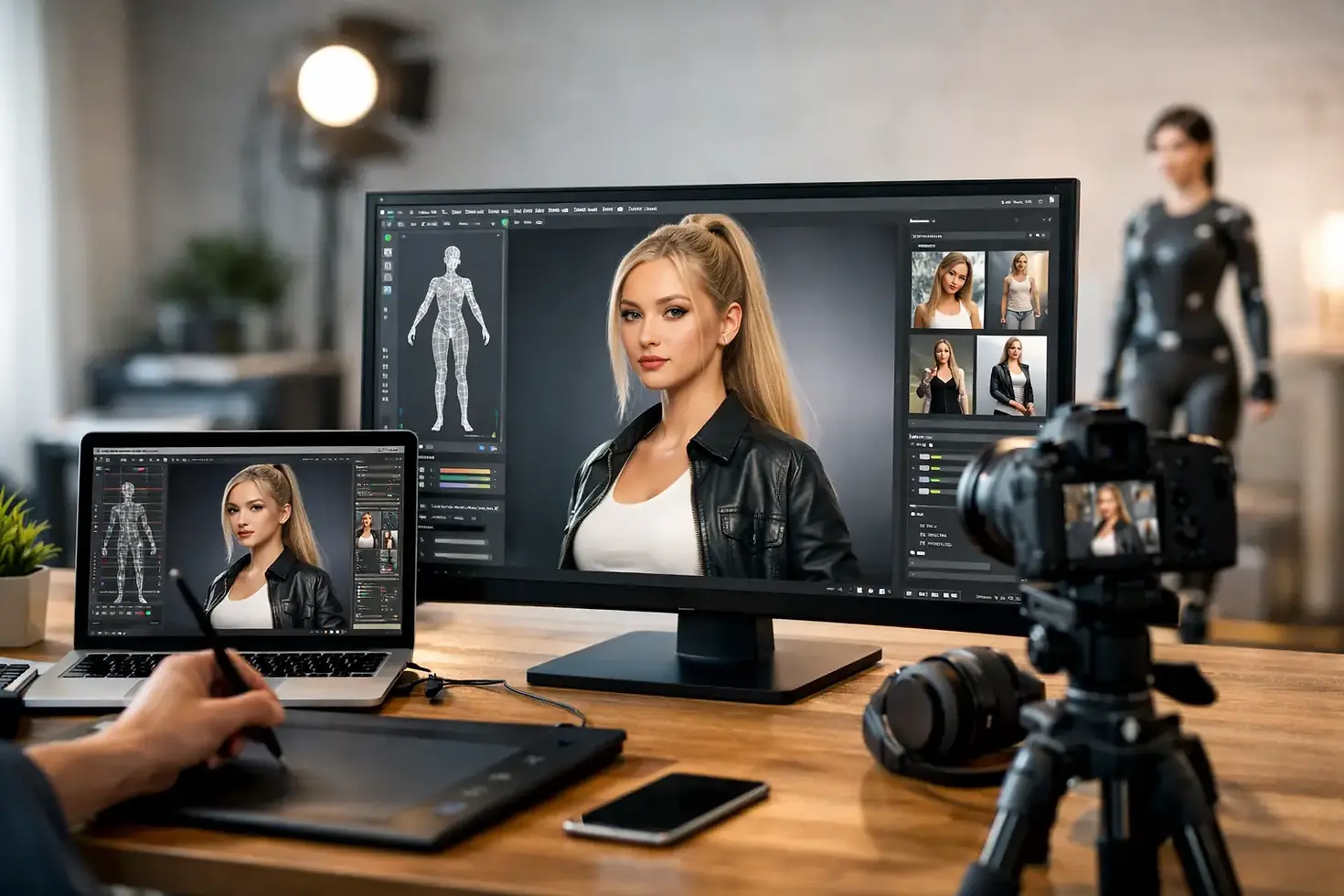
Virtual Influencer Creation Tools That Build Brands
- Curt Dalton
- 5 days ago
- 6 min read

A polished avatar can earn a second glance. A well-designed digital persona can earn attention, trust, and a place in a customer’s buying journey. That distinction is why virtual influencer creation tools are becoming a serious consideration for growth teams, not just a creative experiment for social media.
For brands balancing content demand, channel consistency, and rising creator costs, the opportunity is clear: build an influencer presence that is designed around the brand from the beginning. The challenge is choosing tools and workflows that create more than attractive visuals. A virtual influencer must carry a recognizable point of view, perform reliably across formats, and meet the standards your audience expects.
What Virtual Influencer Creation Tools Actually Need to Do
The term can describe a wide range of platforms, from image-generation apps and video avatar software to voice systems, animation suites, and social media scheduling tools. Used independently, these products can create content quickly. Used strategically, they form a production system for a branded digital spokesperson.
A strong system starts with persona development. Before an image is generated or a script is recorded, the brand needs clarity on who this character is, why the audience should care, and what role the influencer plays in the wider marketing mix. A beauty persona may act as a thoughtful skincare guide. A fintech persona may translate complex topics into clear, credible education. A travel personality may turn destination features into aspirational, shoppable stories.
The best virtual influencer creation tools support that intent rather than replacing it. They should help teams establish a consistent appearance, voice, body language, wardrobe, setting, and editorial style. Just as importantly, they should make it possible to repeat those traits across dozens of campaign assets without the character drifting from post to post.
That consistency has commercial value. Traditional creator relationships can be powerful, but availability, approvals, shifting personal brand interests, and usage rights can limit scale. A custom AI influencer gives brands greater control over campaign timing, visual direction, product messaging, and long-term content libraries. It does not eliminate the need for human creativity. It gives that creativity a more dependable engine.
The Core Capabilities Behind a Credible Digital Persona
Visual identity and character consistency
The first requirement is a distinctive visual identity that can hold up at social speed. The persona should be recognizable in a product close-up, a lifestyle reel, a live-shopping segment, and a campaign still. This goes beyond selecting a face. It includes expressions, styling rules, lighting preferences, locations, and visual cues that reinforce the character’s world.
Many image and video tools can produce impressive individual outputs. The trade-off is continuity. If the character’s features, proportions, or styling change noticeably between assets, the audience sees a generated image instead of a believable personality. Brands should prioritize workflows that preserve character consistency and allow creative variation within approved brand boundaries.
Video, motion, and product storytelling
Static content is useful, but motion is where an influencer begins to feel present. Video creation tools can animate a persona, synchronize speech, produce short-form clips, and adapt creative to vertical formats. For ecommerce teams, this opens practical formats such as product walkthroughs, seasonal launches, tutorials, comparison videos, and paid social variations.
Quality matters because audiences are highly sensitive to unnatural movement, poor lip synchronization, or generic delivery. A short video that feels artificial can weaken trust faster than a well-produced still image. The right approach is selective: use motion where it adds energy, explanation, or emotion, and do not force a talking-head format into every campaign.
Voice and conversational capability
Voice tools bring another layer of identity. A persona’s cadence, vocabulary, pacing, and tone should fit both the brand and the sector. A wellness guide can feel warm and calm. A B2B innovation host may be concise, informed, and direct. The goal is not to imitate a human creator without disclosure. It is to create a consistent branded voice that audiences can recognize.
For interactive experiences, conversational AI can help a digital persona answer common product questions, support live shopping, or guide customers toward relevant content. This requires guardrails. Brands in finance, law, health, and other credibility-sensitive fields need approved knowledge sources, escalation paths, and clear limits on what the persona can claim. Automation should extend expertise, not manufacture it.
Content operations and campaign intelligence
The most overlooked tools are often the ones that turn creative assets into a measurable program. Content calendars, review workflows, asset libraries, analytics dashboards, and testing platforms help brands manage volume without losing strategic focus.
A virtual influencer is especially valuable when content can be adapted with precision. One campaign concept may become creator-style social posts, product education clips, landing-page visuals, retail displays, email creative, and paid media variations. Performance data then reveals which stories, formats, and audience segments are producing engagement, click-throughs, conversions, or stronger brand recall.
Choose the Stack Around the Use Case, Not the Hype
There is no single best tool stack for every organization. The correct choice depends on the role the influencer needs to play.
A fashion or beauty brand may prioritize photorealistic visuals, style control, and rapid campaign refreshes. A wellness company may need educational scripts, approachable voice delivery, and careful claim review. A SaaS or fintech brand may gain more from a polished expert persona that can explain product benefits in a series of concise, credible videos. Arts and culture organizations may place greater emphasis on narrative worlds, imaginative visuals, and community engagement.
This is where many teams make an expensive mistake. They buy software based on a striking demo, then discover that it does not support the production cadence, approval process, or content formats their campaigns require. Tool selection should follow a clear brief: audience, channels, content pillars, legal requirements, brand guidelines, success metrics, and the amount of internal oversight available.
For a founder testing a new concept, a lighter stack and a small campaign pilot may be enough. For an established consumer brand, the better investment may be a custom persona system with documented creative rules, approved prompts, production templates, and ongoing strategic management. Scale is not just about generating more assets. It is about generating the right assets without diluting the brand.
Authenticity Is Designed, Not Assumed
AI influencers can be highly expressive, but authenticity does not come from photorealism alone. It comes from a coherent character, useful content, and a relationship with the audience that feels intentional.
That means the persona needs editorial discipline. It should have recurring themes, informed opinions that fit its role, and content that serves a purpose beyond filling a feed. A digital wellness ambassador could share routines, ingredient education, and product-use moments. A business persona could translate industry trends into plain language, spotlight customer challenges, and demonstrate solutions in context.
Transparency also matters. Brands should communicate appropriately when a persona is AI-generated, particularly when content may otherwise be mistaken for a human endorsement. Clear disclosure protects trust and gives audiences a more honest way to engage with the experience. It is not a creative limitation. It is part of building a modern, credible brand presence.
Legal and ethical controls deserve the same attention as visual quality. Teams should confirm commercial rights for models, voices, training materials, music, and generated assets. They should avoid creating personas that resemble real people without permission, establish review standards for sensitive topics, and ensure that campaign claims remain accurate. The more realistic the influencer becomes, the more important responsible governance becomes.
From Tool Set to Brand Asset
The strongest results come when brands stop treating the influencer as a one-off asset and start treating it as a long-term brand property. Like a distinctive product line or campaign platform, the persona should become more valuable as its story, content library, and audience recognition grow.
That requires a deliberate launch. Start with a role that is easy for the audience to understand, a clear visual introduction, and a focused set of content themes. Test engagement before expanding into new channels or more complex experiences. If the persona earns attention through a consistent point of view, it can later support product launches, event coverage, community education, customer journeys, and live commerce.
AI Quantum Labz approaches this work as branded persona development, campaign strategy, and deployment working together. The technology matters, but the business outcome matters more: an influencer presence built for creative control, meaningful engagement, and measurable performance.
The most useful question is not, “Which tool makes the most realistic avatar?” It is, “What kind of relationship should our brand build with the audience next?” Choose virtual influencer creation tools that help answer that question with clarity, character, and purpose.


Comments