
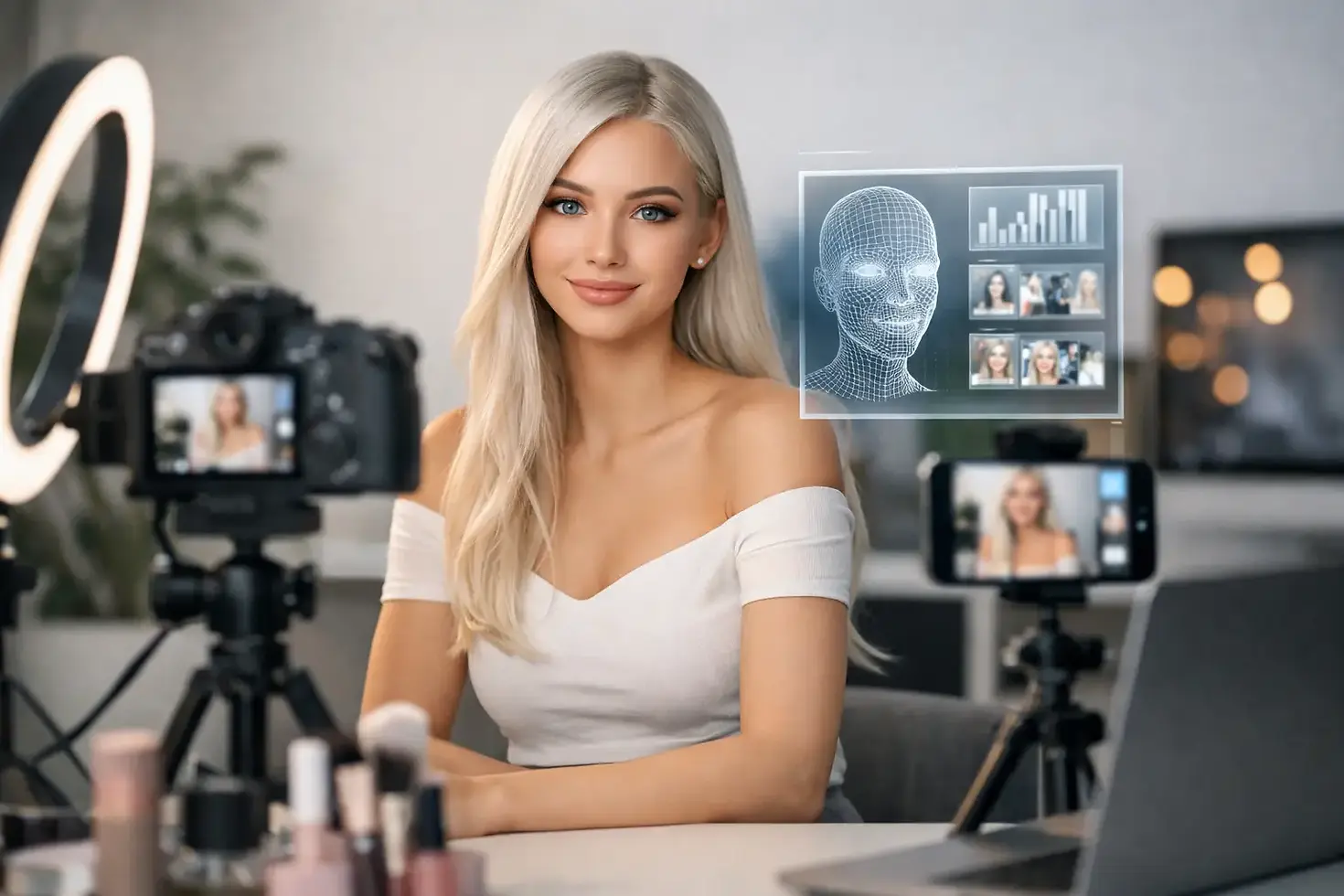
AI Influencer Content That Drives Growth

A product launch falls flat faster than most teams expect when the content feels recycled, off-brand, or overly dependent on creator availability. That is exactly why AI influencer content is moving from experimental marketing to a serious growth channel. For brands that need consistency, speed, and audience-ready storytelling, a tailored AI influencer can function as a scalable brand representative built for performance.
This shift is not about replacing creativity. It is about giving brands more control over how creativity is developed, deployed, and optimized across campaigns. When an AI influencer is designed with a clear persona, a strategic voice, and category-specific relevance, the result is not generic output. It is branded content with direction, continuity, and commercial purpose.
What AI influencer content actually delivers
AI influencer content is not just a stream of generated images or social posts. At a business level, it is a content system built around a digital persona that can represent a brand across multiple formats and touchpoints. That includes short-form video, promotional storytelling, product demos, seasonal campaigns, community-facing social content, and even live shopping assets.
The advantage is not simply volume. The advantage is precision. A brand can shape the character, visual identity, messaging style, and campaign role of the influencer before content ever goes live. That means less reliance on outside interpretation and more alignment between brand strategy and content execution.
For growth teams, this matters because content bottlenecks rarely come from a lack of ideas. They come from coordination issues, inconsistent talent output, legal limitations, scheduling delays, and the inability to repeat what worked without starting over. AI influencer content addresses those operational gaps while keeping the brand experience cohesive.
Why brands are rethinking influencer strategy
Traditional influencer marketing still has value, but it also comes with limits. Human creators bring reach and personality, yet they also introduce unpredictability. Brand fit can drift. Timelines can change. Messaging can vary. In regulated or credibility-sensitive sectors, those variables carry even more weight.
That is where AI influencer content creates a different model. Instead of borrowing someone else’s audience and identity for a campaign window, brands can build an owned digital persona that evolves with the business. The persona can be positioned for wellness, finance, fashion, technology, culture, or any niche where audience expectations are specific and trust matters.
This does not mean every brand should abandon human creators. In many cases, the strongest strategy is hybrid. Human influencers can drive social proof and external reach, while AI influencers provide always-on branded storytelling, campaign continuity, and content production at scale. The smart move is not choosing one side. It is deciding which role each type of influencer should play.
AI influencer content works best when the persona is built with intent
The market is already crowded with avatars that look polished but say very little. That is the fastest way to make AI feel disposable. A high-performing AI influencer needs more than a face. It needs positioning.
That positioning starts with audience logic. Who is this persona meant to resonate with? What kind of authority, aspiration, or relatability should it project? What visual language makes it credible in its category? A beauty brand may need warmth, trend fluency, and editorial appeal. A fintech brand may need clarity, confidence, and a more disciplined tone. An arts and culture campaign may need a stronger point of view and a distinct aesthetic signature.
When those details are handled strategically, content becomes more believable and more useful. The persona stops feeling like a tech gimmick and starts functioning like a deliberate brand asset.
Where AI influencer content creates the most commercial value
The strongest use cases tend to appear where brands need repeatable visibility without sacrificing quality. Ecommerce is an obvious example. Product drops, tutorials, reviews, styling content, promotional sequences, and conversion-focused social creative all require a steady content engine. An AI influencer can support that engine while maintaining a recognizable identity from campaign to campaign.
In wellness and lifestyle, the value often comes from consistent storytelling. Brands in these spaces are not just selling products. They are selling routines, aspirations, and emotional alignment. A well-developed AI persona can carry that narrative over time in a way that feels cohesive rather than fragmented.
In finance, legal, tech, and B2B categories, the opportunity looks slightly different. Here, credibility is central. Brands need content that feels polished, informed, and carefully framed. AI influencer content can help simplify education, present thought leadership, and humanize complex offers without leaning on a rotating cast of spokespeople.
For fashion, travel, and arts-focused campaigns, the visual upside is even more pronounced. A custom AI influencer can appear in varied environments, seasonal concepts, and branded creative scenarios without the usual production friction. That opens more room for ambitious storytelling and faster campaign iteration.
The trade-off brands need to understand
AI influencer content offers control, but control alone does not create engagement. Audiences still respond to story, relevance, and personality. If a brand treats AI as a shortcut to mass content, the output may look efficient while performing poorly.
That is the trade-off. Scale can either strengthen the brand or dilute it. The difference comes down to strategy. The persona must be grounded in audience insight, the content must serve a clear campaign objective, and the brand needs a quality threshold that protects credibility.
There is also a practical question of transparency and audience expectations. Different sectors will need different approaches. Some audiences are excited by visibly futuristic brand identities. Others may respond better when AI is framed as a creative extension of the brand rather than the entire story. It depends on category norms, buyer sophistication, and the level of trust required before conversion.
How to evaluate AI influencer content as a business solution
The right question is not, can AI make content? It can. The better question is whether the content system improves marketing performance in a way your current model cannot.
A useful evaluation starts with five areas: consistency, speed, creative control, channel flexibility, and cost efficiency over time. If your team is struggling to maintain content frequency, brief creators effectively, localize campaigns, or keep visual identity aligned across channels, AI influencer content may solve more than one problem at once.
It is also worth looking at content lifespan. A custom AI persona is not limited to a single campaign. It can become a long-term brand asset that appears in launches, seasonal promotions, education series, live commerce, and paid creative. That continuity compounds value because each new campaign builds on an already recognizable presence.
For teams focused on performance, measurement matters. Engagement rate, watch time, click-through behavior, conversion support, and creative testing velocity all become more actionable when the content environment is more controlled. That makes AI influencer content especially attractive for brands that want both storytelling and measurable optimization.
Why execution matters more than the technology itself
The technology behind AI influencers is advancing quickly, but technology is not the differentiator. Execution is. A brand does not gain an advantage from having an AI character. It gains an advantage from having the right persona, the right narrative framework, and the right deployment strategy.
That is why consultative development matters. The strongest programs begin with brand positioning, audience segmentation, visual direction, and content planning before production scales. Industry context matters too. What works for a skincare launch will not work for a law firm or a fintech platform. Category nuance shapes voice, styling, authority, and the content formats most likely to convert.
This is where a specialized agency model has a clear edge. AI Quantum Labz approaches AI influencer development as a branded growth system, not a generic avatar build. That distinction matters because the objective is not to create content for content’s sake. The objective is to create a digital persona that can drive engagement, support conversion, and represent the brand with precision.
The next standard for brand storytelling
AI influencer content is quickly becoming a serious option for companies that want more than intermittent campaign exposure. It gives brands a way to own their influencer presence, shape it with intention, and deploy it across channels with consistency that traditional models rarely sustain.
The brands that move early will not win because they used AI first. They will win because they used it well - with a clear persona, strong creative discipline, and a commercial strategy behind every asset. When that foundation is in place, AI influencer content stops looking like a trend and starts acting like an advantage.
The real opportunity is not just producing more content. It is building a branded presence that can keep showing up, keep telling the story, and keep performing when attention is expensive and consistency is hard to maintain.


Comments