
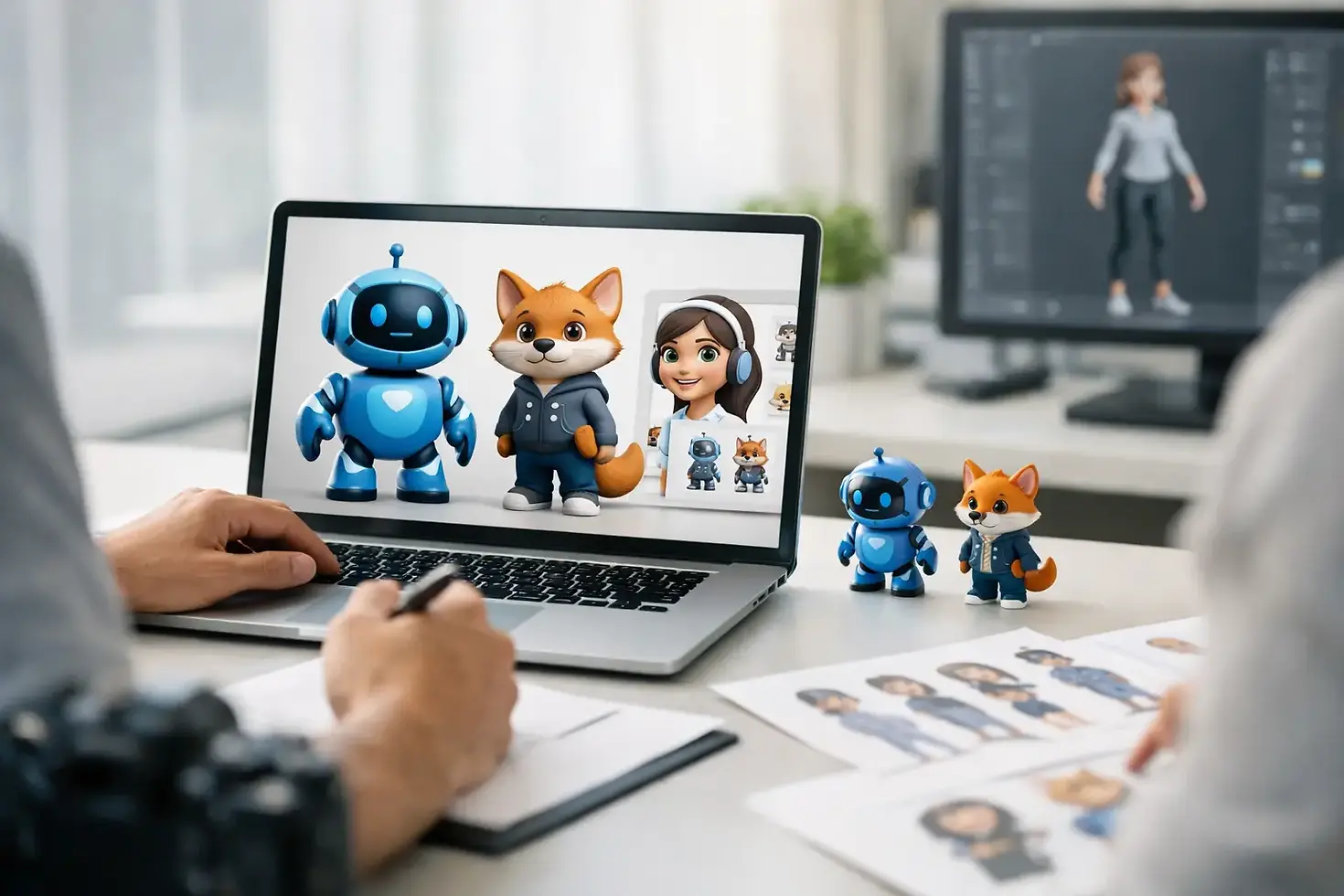
A Guide to Branded Digital Characters

A brand can spend months refining its voice, visual identity, and campaign strategy - then hand its social presence to creators who may change direction, go quiet, or miss the brief. That gap is exactly why a guide to branded digital characters matters now. For growth-focused brands, a digital character is not a gimmick. It is a controlled, scalable brand asset designed to show up consistently, tell better stories, and move audiences toward action.
The most effective branded digital characters sit somewhere between influencer, spokesperson, and campaign engine. They are built to express a brand's personality across social content, product education, paid creative, community engagement, and even live commerce. When done well, they create familiarity at scale without the scheduling risk, inconsistency, or creative drift that often comes with traditional talent partnerships.
What branded digital characters actually do
A branded digital character is a custom-built persona created to represent a business in a way that feels recognizable, relevant, and platform-ready. That persona has a defined look, voice, tone, backstory, and content role. It may appear as a virtual influencer, a digital host, a product educator, or a lifestyle personality aligned to a specific audience segment.
The difference between a generic avatar and a true branded character is strategic depth. A generic avatar can speak. A branded character can sell a story, support a positioning strategy, and perform consistently across channels. It is designed around audience psychology as much as visual design.
For a beauty brand, that might mean a polished character who demonstrates routines, talks ingredients, and creates aspirational lifestyle content. For a fintech company, it may mean a sharp, credible persona who simplifies complex topics and gives the brand a more approachable public face. For arts and culture, it could be a visually distinct personality that turns promotion into narrative.
A guide to branded digital characters starts with brand clarity
Before design, animation, or content production, there is a more commercial question to answer: what job should this character do for the business?
Some brands need a digital character to increase content output without increasing production friction. Others need one to create consistency across launches, seasonal campaigns, and always-on social channels. Some want a more ownable alternative to creator dependence. Others are looking for a differentiated way to educate skeptical buyers in categories where trust and repetition matter.
That objective shapes everything. If the character is meant to drive conversions, it needs stronger product fluency and clearer calls to action. If the goal is brand affinity, personality and world-building may matter more. If the goal is category authority, the visual style may become less playful and more refined. There is no single best version. It depends on the audience, the offer, and the role the character needs to play in the funnel.
This is where many brands get it wrong. They start with appearance because it feels tangible. The smarter move is to start with positioning. A digital character should embody strategy before it embodies style.
The components of a high-performing branded character
A strong digital character feels intentional from every angle. The visual identity needs to be distinctive enough to stand out in-feed, but aligned enough with the brand that it does not look detached from the rest of the marketing ecosystem. That balance matters. Too polished and it can feel cold. Too exaggerated and it can undermine trust.
Voice is equally important. The best characters speak with a tone calibrated to the market they serve. A wellness persona can be warm and motivational. A luxury fashion persona can be composed and editorial. A legal or financial character needs authority without sounding mechanical. If the voice does not match audience expectations, the illusion breaks fast.
Then there is behavioral design - the recurring themes, expressions, content habits, and narrative patterns that make the character feel consistent over time. This is what turns a visual asset into a recognizable presence. Audiences remember characters that behave in repeatable ways.
Commercially, the character also needs a content operating model. It should be clear where it appears, how often it publishes, what formats it owns, and how it supports campaign goals. A beautiful persona with no deployment strategy is just design work.
Where branded digital characters create the most value
The clearest advantage is scale with control. Brands can produce more content without rebuilding chemistry every time they launch a campaign. The character does not need contract renegotiation, travel logistics, or talent availability checks. It can be adapted for short-form video, product demos, paid ads, scripted storytelling, ecommerce creative, and brand announcements while staying on-message.
That consistency becomes especially valuable in industries where visual identity and repeated exposure shape buying behavior. In beauty, fashion, and wellness, a digital character can create a steady stream of aspirational, educational, and conversion-focused content. In tech, finance, and other credibility-sensitive categories, the opportunity is different but equally strong. A well-built persona can humanize dense products while preserving precision and compliance.
There is also a long-term brand equity argument. Traditional creator partnerships can be effective, but they are rented attention. A branded digital character is an owned asset. Over time, that can become a meaningful advantage for companies that want more control over how their story is told.
Still, ownership is not the same as automatic trust. Audiences respond when the character feels authentic within the context of the brand. That means the content cannot be empty spectacle. It has to carry a point of view, a purpose, and a level of creative discipline that respects the audience.
How to build a guide to branded digital characters into your marketing strategy
The most successful brands do not treat digital characters as side experiments. They build them into the campaign architecture.
Start by identifying the audience segment that will respond best. A single company may need different narrative styles across product lines, but that does not always mean multiple characters. Often, one well-developed persona with flexible content pillars is more powerful than a collection of disconnected concepts.
Next, define the core use cases. Will the character lead organic social content, support product education, appear in paid campaigns, host live shopping events, or act as the face of a launch? Clarity here prevents creative drift later.
From there, the content system should be built around repeatable formats. Think recurring product spotlights, trend-led social videos, founder-adjacent storytelling, behind-the-brand narratives, or customer education sequences. Repetition is not a weakness. It is how familiarity turns into recognition.
Measurement should stay grounded in business outcomes. Engagement matters, but engagement alone is not enough. The better questions are whether the character improves content efficiency, increases view-through rates, strengthens branded recall, supports conversion, or reduces dependence on inconsistent creator pipelines.
For companies ready to move seriously in this space, working with a specialized partner often makes more sense than piecing together fragmented tools. A consultative build process can align persona development, campaign strategy, content planning, and deployment into one commercially coherent system. That is where brands like AI Quantum Labz position digital characters as performance assets rather than visual novelties.
The trade-offs smart brands should consider
Branded digital characters are powerful, but they are not magic. They work best when the brand already has a clear point of view and a willingness to invest in creative direction. If the messaging is weak, a digital character will not fix it. It may simply make the weakness more visible.
There is also a pacing question. Some audiences will respond immediately to an AI-powered persona. Others may need a more gradual introduction, especially in categories where human expertise is central to trust. In those cases, pairing the character with human founders, experts, or customers can create a stronger bridge.
Brands also need internal alignment. Legal, brand, paid media, and content teams should agree on what the character can say, where it appears, and how it represents the business. That structure does not limit creativity. It protects it.
The payoff is strongest when companies treat the character as a long-term brand representative, not a short-term stunt. Short campaigns can generate attention, but sustained deployment builds memory. Memory is what turns visibility into growth.
Why this shift is accelerating
Marketing teams are under pressure to produce more content, across more channels, with tighter timelines and clearer ROI. At the same time, audiences want personality, consistency, and entertainment from the brands they follow. Branded digital characters sit at the intersection of those demands.
They give companies a way to create high-frequency storytelling without sacrificing brand standards. They allow for precision in voice, aesthetics, and campaign execution while still leaving room for creativity. Most importantly, they offer a path to build an ownable presence in a market where borrowed influence is becoming more expensive and less predictable.
The brands that win here will not be the ones chasing novelty. They will be the ones using digital characters to express a sharper brand identity, produce more impactful content, and create a more controlled path from attention to conversion.
If your brand is ready for a spokesperson that can scale with your ambitions, the real opportunity is not just to appear more futuristic. It is to become more consistent, more distinctive, and far more effective wherever your audience is already watching.


Comments